If you only buy two pieces of equipment for your hydroponic garden, make them a pH meter and an EC meter. They matter more than your nutrient brand, your light brand, and your system type combined.
What is pH?
pH measures how acidic or alkaline your nutrient water is, on a scale from 0 (battery acid) to 14 (drain cleaner). Water itself is neutral at 7. Hydroponic plants want it slightly acidic — between 5.5 and 6.5.
Why pH matters more than anything
Outside the 5.5–6.5 window, plant roots literally can't absorb most nutrients, even when those nutrients are sitting right next to them. Yellow leaves on a plant in nutrient-rich water? It's almost always pH.
What is EC?
EC (electrical conductivity) measures how much dissolved stuff — mostly nutrient salts — is in your water. The more nutrients, the higher the EC.
- Seedlings: EC 0.6–1.0
- Leafy greens: EC 1.0–1.4
- Fruiting plants: EC 2.0–3.0
How to adjust pH
Use "pH Up" (potassium hydroxide) and "pH Down" (phosphoric acid) — a few drops change the whole reservoir. A $20 bottle pair lasts most home growers years.
Meters worth buying
- Apera PH20 ($45) — accurate, easy to calibrate, our daily driver.
- Bluelab Truncheon EC ($120) — gold standard, lasts forever.
- Cheap combo pen ($15) — fine to start, replace within a year.
Related beginner guides: How to Transplant Seedlings · How to Clean Your Hydroponic System · Hydroponic Basil Problems
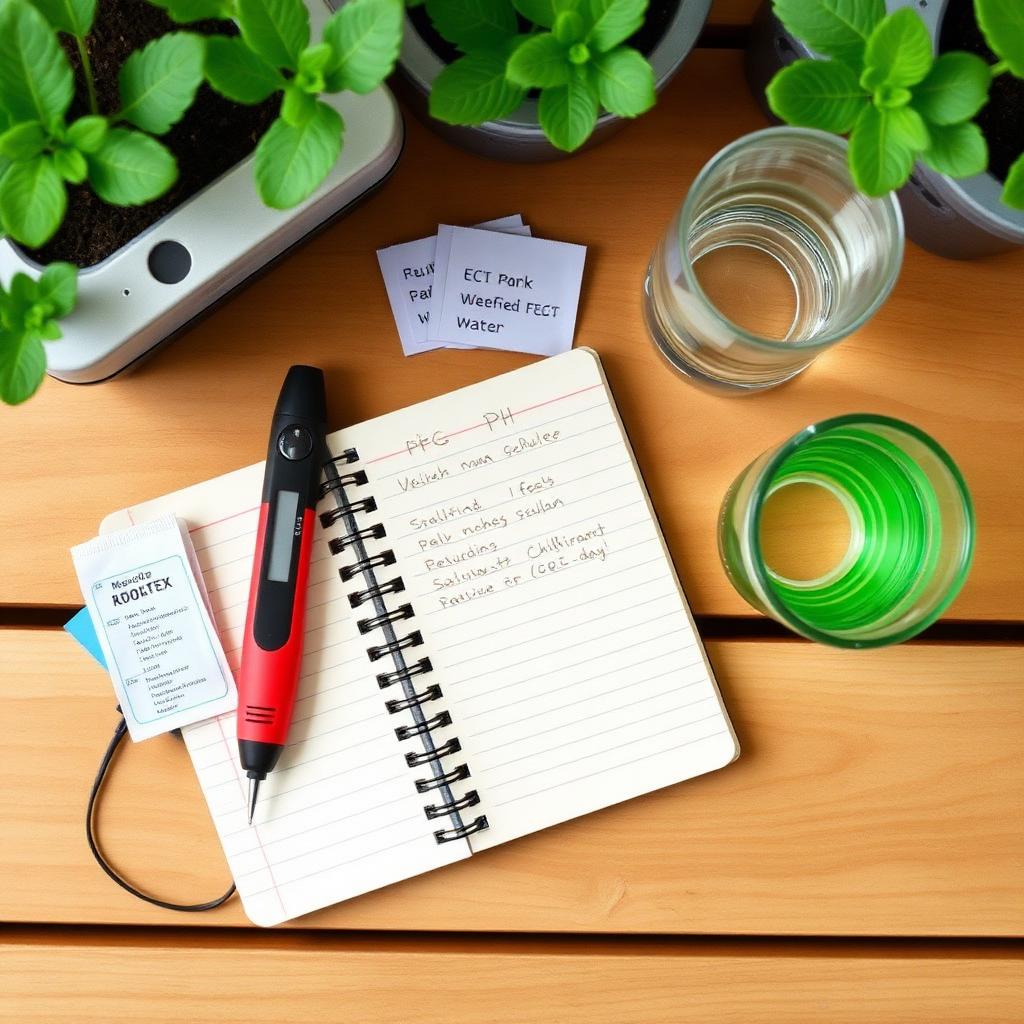
A two-minute weekly routine that prevents 90% of problems
We log every reservoir top-up and pH/EC reading from our test bench in a shared spreadsheet. After three years of data, the single intervention with the biggest impact on plant health is a once-weekly pH and EC check that takes about two minutes. The rest of the routine — flushing, refilling, deep-cleaning — is optional fine-tuning. The weekly check is not.
What pH and EC are actually telling you about the plant
A creeping pH (drifting upward over a week) usually means the plant is feeding heavily and stripping out specific nutrient salts faster than others — a sign of healthy growth, not a problem. A falling EC alongside that drift is normal. An EC that rises without a corresponding drop in water level means the plant has stopped feeding and you have a problem upstream (light, temperature, root health) before you have a nutrient problem.
The cheap, accurate-enough way to start
You do not need a Bluelab on day one. A £15 combo pen, calibrated weekly with the sachets it ships with, will get you through your first year of growing comfortably. Upgrade only when you start growing fruiting plants seriously, because they tolerate a much narrower EC window. For our long-term meter shootout, see best pH meters.
Frequently asked questions
How often should I check pH?
Every 3–4 days in a recirculating system. Plants change pH as they feed.
Do paper pH strips work?
Barely. They're too imprecise for hydroponics — get a digital meter.
Comments (0)
Join the conversation. Be kind — offensive language is automatically filtered.
Loading…
Loading comments...
Keep reading
Beginner
Hydroponic Nutrients Explained: NPK, pH and EC for Beginners
NPK, pH, EC — what the numbers actually mean, and a feeding routine you can stick to.
Beginner
10 Common Hydroponic Mistakes (and How to Fix Them)
Yellow leaves, slimy roots, algae — the real causes and the 30-second fixes.
Beginner
Hydroponics for Beginners: A Complete Starter Guide
What hydroponics is, the 6 main types, and exactly which one to pick if you've never grown a plant.