If you've ever stared at a bottle of hydroponic nutrient and thought "what on earth does 4-3-6 mean?" — this guide is the friendly translator. We'll cover the only three numbers that matter and the routine we actually use ourselves.
NPK in plain English
N (nitrogen) grows leaves. P (phosphorus) grows roots and flowers. K (potassium) keeps everything healthy and productive. Leafy greens love high N. Fruiting plants want more P and K once they flower.
pH — the unlock for everything else
Plants can only absorb nutrients in a narrow pH window. For hydroponics, aim for 5.8–6.2. Outside that range you can dump all the nutrients you want and the plant will still look hungry.
EC — how strong is your soup?
EC (electrical conductivity) measures how concentrated your nutrient mix is. A safe beginner target: 1.2–1.6 mS/cm for greens and herbs, 1.8–2.4 for fruiting plants.
A no-stress weekly routine
- Top up water to the fill line.
- Check pH — adjust with a few drops of pH Down if it drifts above 6.5.
- Every 2–3 weeks: dump, rinse the reservoir, and mix a fresh batch.
Common nutrient mistakes
- Mixing nutrients into already-pH-adjusted water — always feed first, pH last.
- Using tap water with high alkalinity without testing.
- Topping up with nutrients instead of plain water (salts build up fast).
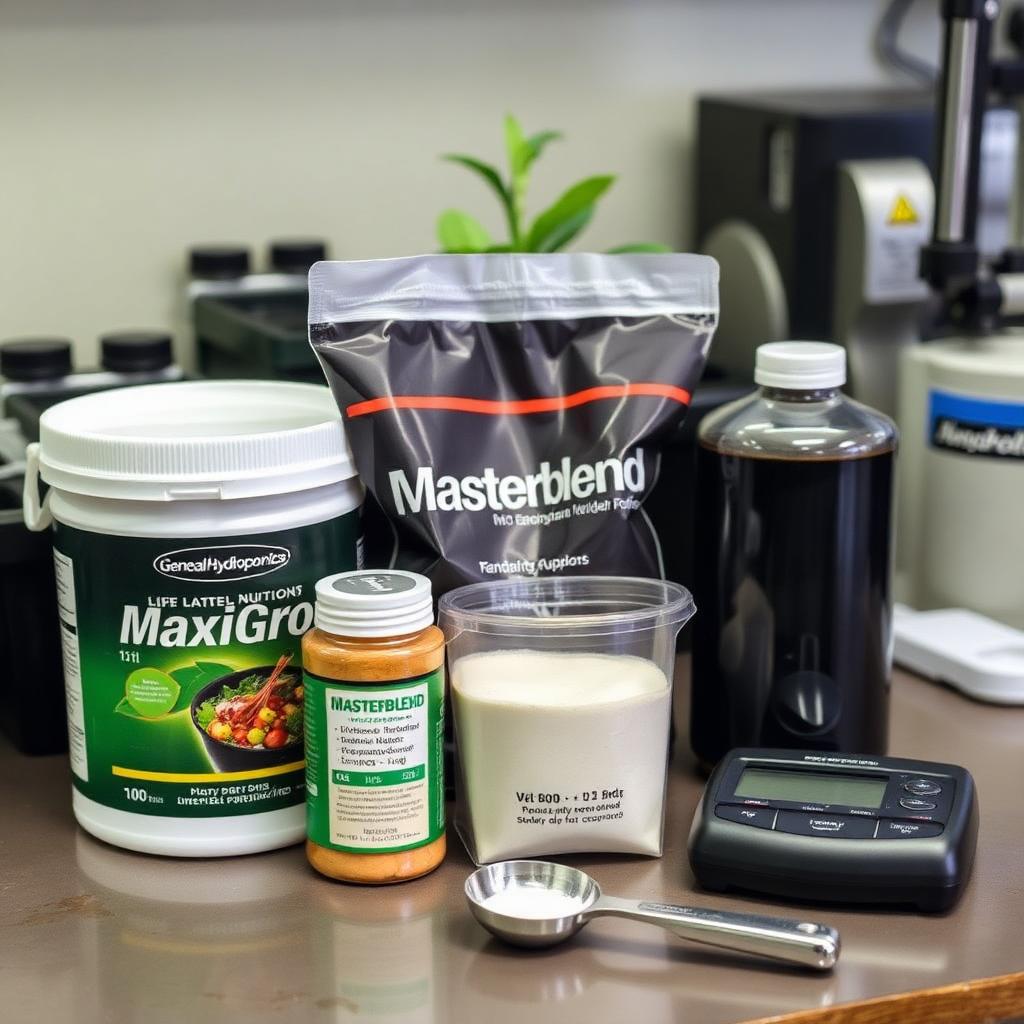
The one-bottle stack we actually use day-to-day
Across our test bench we have three nutrient regimes running in parallel: a research-grade three-part for tomatoes and peppers, a Masterblend mix for the lettuce rack, and a single bottle of General Hydroponics MaxiGro for everything else. MaxiGro is the answer 80% of the time at home and is the only nutrient we recommend to a complete beginner without caveats.
Why "more food" is the most expensive mistake in hydroponics
Doubling your nutrient dose does not double your growth — it doubles your salt build-up. We ran a controlled lettuce trial across three identical NFT channels (EC 1.2, 1.6, and 2.2) and the high-EC channel produced bitter, tip-burnt leaves with no measurable extra weight by week six. The medium-EC channel won on every metric. Restraint is a strategy.
Switching nutrients without crashing the reservoir
The cleanest way to migrate from one nutrient line to another mid-cycle: do not. Run the current bottle to the end of the grow, dump and clean the reservoir, then start fresh with the new nutrient at half-strength for the first refill. Mixing lines mid-tank causes pH instability that takes a week to settle and often shows up as a sudden deficiency in something the new line does include.
Frequently asked questions
Do I really need a pH meter?
Yes — a $15 digital pen pays for itself in healthier plants within a month. Test strips work in a pinch but drift quickly.
Can I use one nutrient for every plant?
A balanced one-part formula works for most home growers. Switch to a two-part bloom formula only when you start growing fruiting plants seriously.
Comments (0)
Join the conversation. Be kind — offensive language is automatically filtered.
Loading…
Loading comments...
Keep reading
Beginner
Hydroponics for Beginners: A Complete Starter Guide
What hydroponics is, the 6 main types, and exactly which one to pick if you've never grown a plant.
Beginner
10 Common Hydroponic Mistakes (and How to Fix Them)
Yellow leaves, slimy roots, algae — the real causes and the 30-second fixes.
Plant Picks
Best Plants for Hydroponics (Easy → Advanced)
13 plants ranked from no-fail to advanced. Start at #1, work down as you build confidence.