Not every plant thrives in water. Some — like lettuce — practically grow themselves. Others, like watermelon, will eat your apartment. Here are the 13 best hydroponic plants for beginners, ranked from easiest to most ambitious.
Tier 1 — Plant these first
- Lettuce. 28-day cycle, near-zero maintenance, gorgeous results.
- Basil. Fast, fragrant, hard to kill. Genovese is the classic pick.
- Mint. So vigorous it's actually a problem outdoors — indoors that's a feature.
Tier 2 — Add these next
- Parsley — slow to germinate, then steady all season.
- Cilantro — fast, but bolts in warm rooms. Restart every 4 weeks.
- Kale & chard — bigger plants, bigger yields.
- Spinach — likes it cool; struggles above 75°F.
Tier 3 — Once you're comfortable
- Strawberries — gorgeous, real fruit indoors. Needs strong light.
- Cherry tomatoes — possible in tall systems with serious lighting.
- Hot peppers — slow but very rewarding.
Tier 4 — Advanced only
- Cucumbers — vining, need trellising.
- Beans — possible but space-hungry.
- Watermelon — technically yes; practically no.
What never works well
Skip carrots, potatoes, onions, garlic — root vegetables need depth and structure that hydroponic systems aren't designed to deliver.
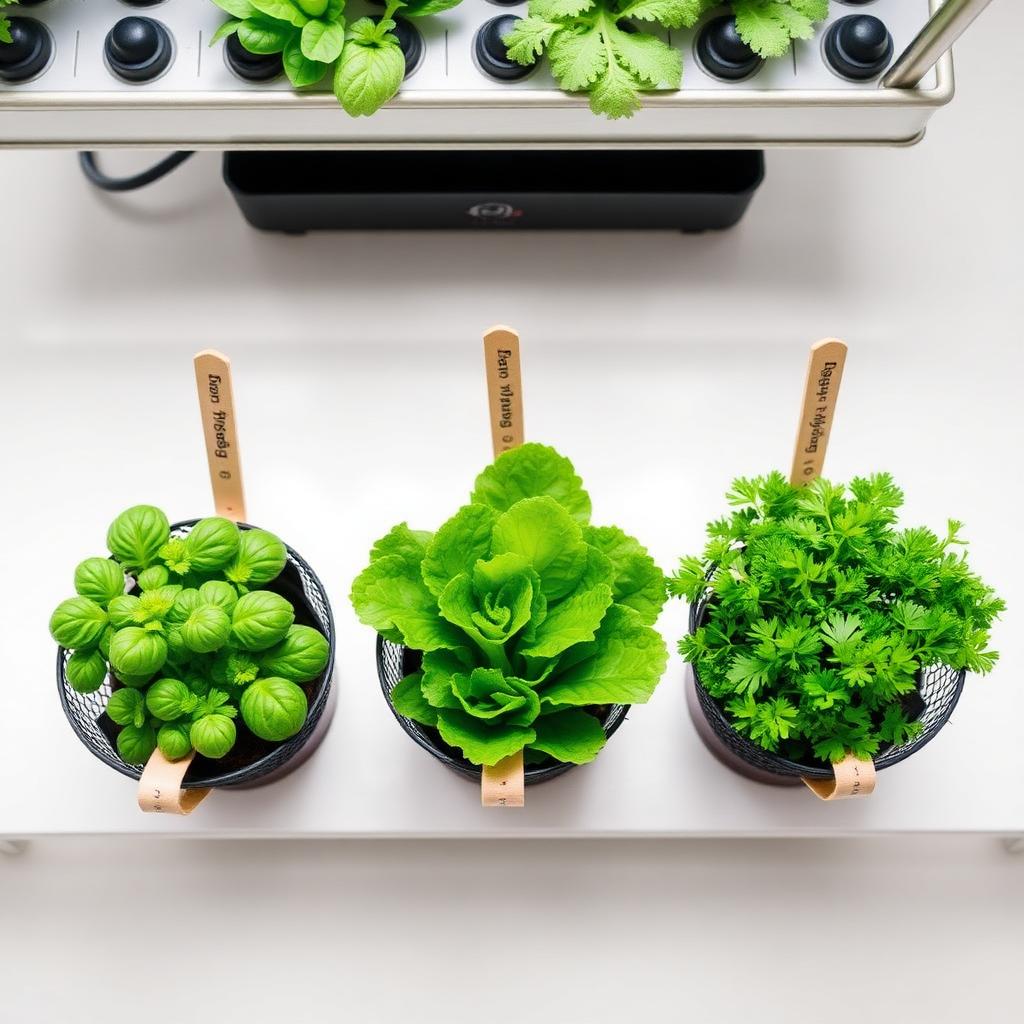
What we keep replanting after three years
We have rotated through more than forty varieties in our test space. The shortlist below is everything that earned a permanent slot — meaning it germinated reliably, hit harvest weight, and did not throw a tantrum every time the EC drifted half a point.
- Genovese basil — the workhorse. Hits 30 cm in five weeks from seed and re-grows three or four times before bolting.
- Buttercrunch lettuce — forgiving, tolerates the warmer reservoir temperatures of a flat in summer.
- Curly parsley — slow to germinate (give it 14 days) but produces for months.
- Rainbow chard — surprisingly happy in deep water culture, beautiful at harvest.
- Mizuna and pak choi — six-week crops, almost impossible to kill.
What we recommend you skip at first
Tomatoes, peppers and strawberries get most of the YouTube attention because the payoff is dramatic. They are also the three categories beginners abandon most often. Each one needs a taller light, a stronger nutrient profile, pollination help, and a real EC meter. Get a year of greens and herbs under your belt first; the fruiting plants will be much easier once you have intuitively learnt what a hungry plant looks like.
The single biggest predictor of success
In our records, the variable that correlates most strongly with a beginner sticking with hydroponics for more than three months is not the system, the nutrient, or even the light — it is whether their first crop was basil. Basil grows fast enough to give visible progress weekly, smells incredible, and you can use it in cooking from week three. That early reward loop is what keeps people topping up the reservoir.
Frequently asked questions
What grows fastest hydroponically?
Lettuce and basil — both produce usable harvest in 3–4 weeks from seed.
Can I mix plants in one system?
Yes, as long as they share light and nutrient needs. Lettuce + basil works great; lettuce + tomatoes does not.
Comments (0)
Join the conversation. Be kind — offensive language is automatically filtered.
Loading…
Loading comments...
Keep reading
Plant Guides
How to Grow Basil Indoors Hydroponically (Step by Step)
From seed to first pesto in 4 weeks — the exact setup, lighting, and pinching schedule.
Plant Guides
How to Grow Lettuce Hydroponically (28-Day Guide)
Crisp, sweet butterhead lettuce in 28 days using the Kratky method. No pumps required.
Plant Guides
How to Grow Strawberries Indoors Hydroponically
Yes, you can grow real strawberries in your apartment. Here's the complete playbook.