Indoor strawberries are the most underrated hydroponic project. Set up correctly, a small tower can produce a handful of perfect berries every week from a single plant. Here's how.
Pick the right variety
- Albion — day-neutral, big fruit, the indoor gold standard.
- Seascape — heavy yielder, great flavor.
- Mara des Bois — small berries, intense flavor, harder to find.
- Skip June-bearing varieties — they only fruit a few weeks per year.
The system
Strawberries do brilliantly in a vertical tower or a small DWC setup with strong lighting. Skip countertop kits — most don't have the headroom or light intensity strawberries need.
Lighting
This is non-negotiable: 14 hours per day of full-spectrum LED at 200+ PPFD. A Spider Farmer SF-1000 or HLG 100 V2 is the right tier. Underpowered light = leaves but no fruit.
Pollination
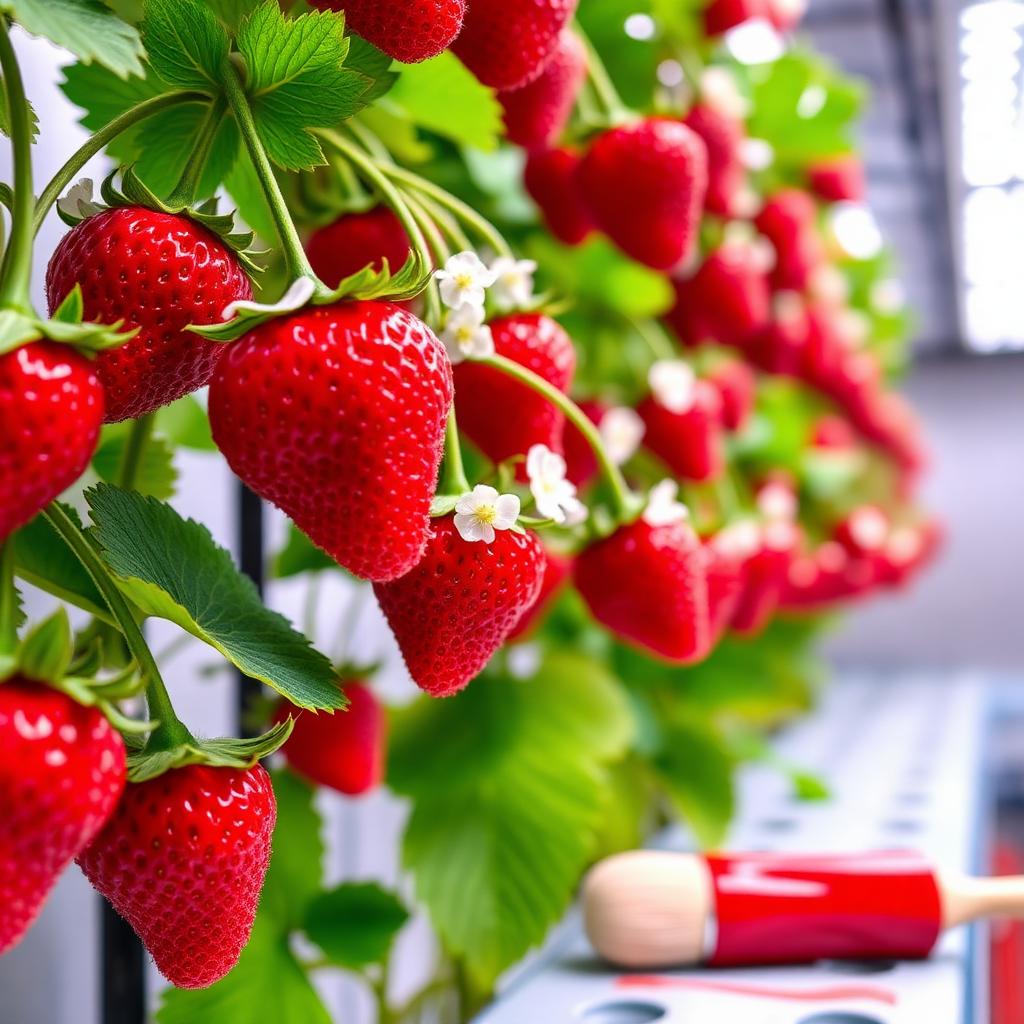
No bees indoors? Use an electric toothbrush or a soft paintbrush. Touch the center of each flower for 2–3 seconds every day they're open. Skip this step and you'll get tiny, deformed berries.
Nutrients
Switch from a vegetative formula (high N) to a bloom formula (higher P and K) as soon as flowers appear. Keep pH between 5.8 and 6.2.
Harvest schedule
Day-neutral varieties produce continuously after week 8. Pick when fully red — strawberries don't ripen off the plant.
The variety choice that decides 80% of your success
Day-neutral varieties — Albion, Seascape, Mara des Bois — are the only realistic option for indoor hydroponics. June-bearing varieties need a long cold dormancy to set fruit and will stubbornly refuse under continuous indoor lighting. We have ruined two cycles personally by ignoring this and "trying anyway" with supermarket runners of unknown variety.
The pollination trick nobody mentions in YouTube walkthroughs
Indoor strawberries set deformed fruit when self-pollinated by hand-vibration alone. The difference-making intervention is a small soft-bristle paintbrush, used to dab pollen between flowers each morning for the first ten days of bloom. Our hand-pollinated fruits were noticeably rounder and ~30% heavier than the "let the air sort it out" control batch.
The light and nutrient targets that actually work
- Light: 14 hours at 250 µmol/m²/s at canopy height. Most countertop kits do not get there — plan on a supplemental LED bar.
- EC: 1.6 in vegetative phase, raised to 2.0 once flowers set.
- pH: 5.8 — strawberries are unusually fussy about a creeping pH.
- Temperature: 18–24 °C reservoir. Anything warmer and fruit-set drops sharply.
Frequently asked questions
Can I grow strawberries from grocery seeds?
Technically yes, but they take 18+ months to fruit. Buy bare-root crowns or established starts — you'll harvest in 2–3 months.
How many plants for a real harvest?
Six plants is enough for a small bowl of berries every week once they're established.
Comments (0)
Join the conversation. Be kind — offensive language is automatically filtered.
Loading…
Loading comments...
Keep reading
Plant Picks
Best Plants for Hydroponics (Easy → Advanced)
13 plants ranked from no-fail to advanced. Start at #1, work down as you build confidence.
Reviews
Best Indoor Hydroponic Systems for Beginners (2026)
We tested 11 countertop and tower systems over 6 months. Here's what's actually worth your money.
Grow Lights
Best Grow Lights for Herbs Indoors (2026)
Full-spectrum LED picks for basil, mint, parsley, and cilantro — for windowsills, shelves, and tents.