Click & Grow makes the most attractive indoor garden on the market. The Smart Garden 9 looks like an Apple product. The question is whether the soil-based smart pods and minimalist aesthetic justify the $249 price tag.
What we loved
- Design. White, quiet, premium. The kind of object you'd leave on a kitchen island forever.
- Self-watering reservoir lasts 2–3 weeks. Fill it, forget it.
- Soil-based smart pods are nearly impossible to overwater — easier than rockwool for absolute beginners.
- Whisper-quiet: ~30 dB. No pump cycling.
What we didn't
- Yield is modest. 240g over 8 weeks vs 312g for the AeroGarden Harvest 360.
- Proprietary pods only. Refillable "experimental" pods exist, but they're fiddlier than AeroGarden's grow-anything sponges.
- Pod cost is high. ~$25 for 9 plants.
How it stacks up
- vs AeroGarden Harvest 360: Click & Grow wins on looks and silence, AeroGarden wins on yield and pod variety.
- vs iDOO 12-Pod: Click & Grow looks better; iDOO yields more per dollar.
Who should buy it
People who care about how their countertop looks more than about kilograms of basil. Households where the garden has to live on a designer island, not in a utility nook.
Free: The 12-page Indoor Hydroponics Starter Guide
Everything we wish we'd known before our first harvest — equipment, seeds, nutrients, and a 4-week plan you can actually finish.
One email, the PDF, then a short weekly series. Unsubscribe any time.
Related guides: AeroGarden vs Click & Grow · Best Indoor Herb Gardens · Best Indoor Hydroponic Systems for Beginners
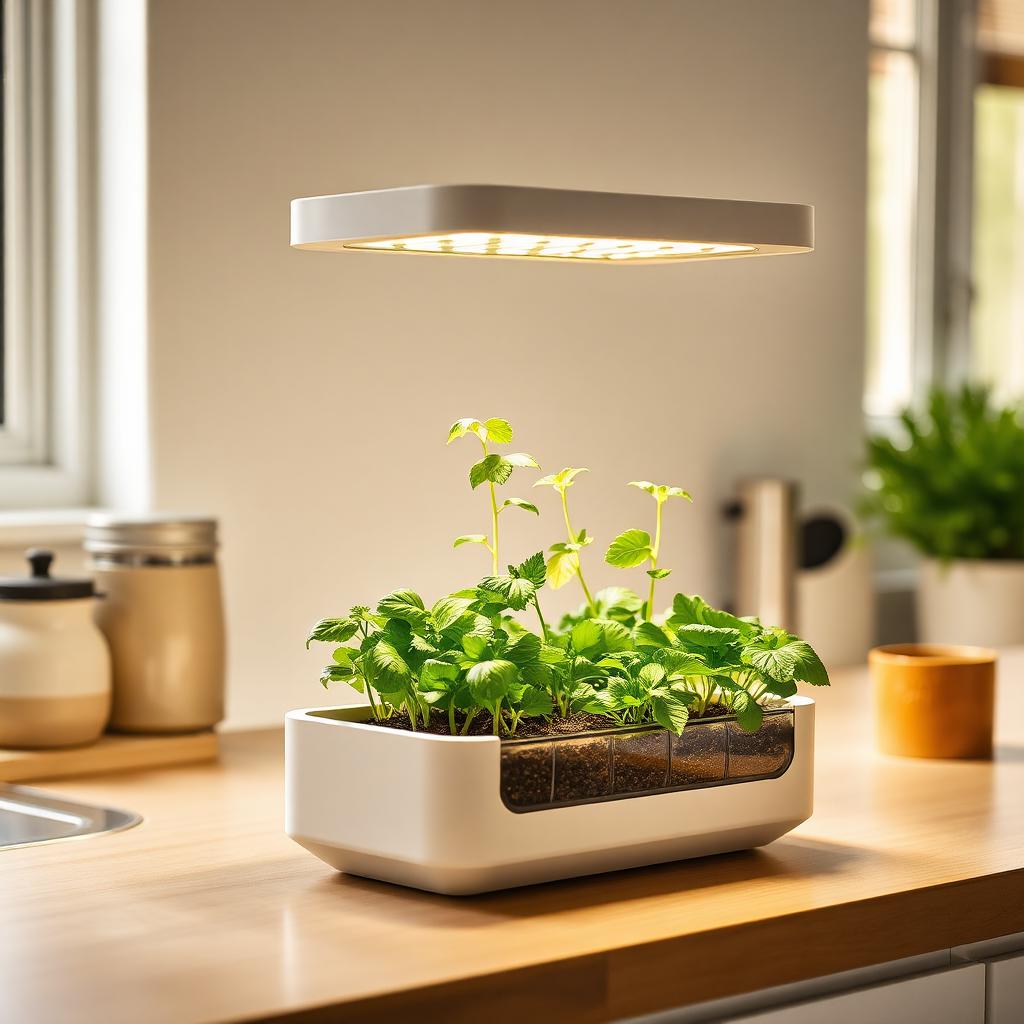
A year with the Smart Garden 9 on a sunny kitchen counter
We have run a Click & Grow Smart Garden 9 continuously for 14 months. It is the only system on our bench that has never needed an unplanned intervention — no pump failure, no LED dimming, no electronics quirks. That reliability is the single most underrated thing about the brand.
Where the design genuinely shines
- The two-week reservoir means it survives an actual holiday. Most "self-watering" countertop kits do not.
- Soil-pod design means there is no nutrient mixing, no EC, no pH — friction count for a non-gardener is zero.
- The lights are flicker-free and warm enough to live with on a worktop where you eat dinner.
The honest downsides
Pods are expensive (around £2 each) and the "Plant your own" baskets are fiddlier than the marketing implies — the soil disc disintegrates if you over-water during germination. Yield is roughly 25–30% lower than an AeroGarden Harvest 360 over an identical 8-week cycle, almost entirely because the LED panel is less intense.
For our head-to-head against AeroGarden, see the full comparison.
Frequently asked questions
Can I use my own seeds in a Click & Grow?
Yes — the experimental pods let you, but expect lower germination than the proprietary smart soil pods.
Does it grow tomatoes?
Click & Grow sells mini-tomato pods, but yields are small — 8–12 cherry tomatoes per plant per cycle.
How often do I refill the water?
Every 2–3 weeks for mature plants. The low-water LED indicator tells you exactly when.
Comments (0)
Join the conversation. Be kind — offensive language is automatically filtered.
Loading…
Loading comments...
Keep reading
Comparison
AeroGarden vs Click & Grow: Honest Head-to-Head (2026)
Yield, ease, design, and 12-month cost. Side-by-side from a grower who owns both.
Buying Guide
Best Indoor Herb Gardens (2026)
Forget the $15 windowsill kits — these are the countertop herb gardens that actually keep up with weekly cooking.
Reviews
Best Indoor Hydroponic Systems for Beginners (2026)
We tested 11 countertop and tower systems over 6 months. Here's what's actually worth your money.